

Author:yucheng Time:2025-12-18 16:21:29 Views:67
5 major causes of starter overload and burnout
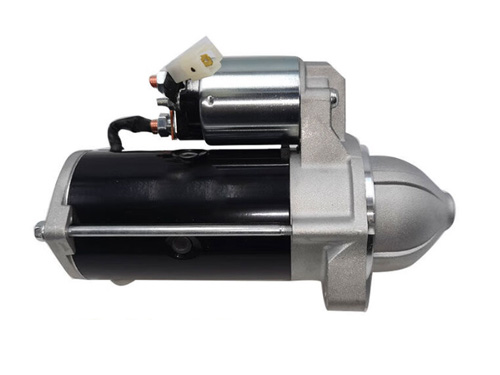
Starter overload burnout refers to permanent damage caused by the working current far exceeding the rated value, resulting in overheating and melting of internal coils, erosion of commutators, and increased wear of electric brushes. The core causes are concentrated in three directions: mechanical jamming, circuit abnormalities, and improper working conditions. It can be specifically divided into the following five categories:
1. The engine is mechanically stuck, causing excessive load on the starter motor
This is the core cause of starter overload and burnout. When there is a stuck fault inside the engine, the starter needs to output torque far exceeding the rated value to drive the flywheel, and the current will sharply increase.
Common scenarios: engine crankshaft locking, piston cylinder jamming, timing system failure, abnormal oil viscosity (such as oil solidification at low temperatures), or foreign objects entering the cylinder causing the piston to be unable to move.
Damage principle: When the starter is in a "locked rotor" state for a long time, the internal resistance of the motor generates a large amount of heat, which can burn out the stator and rotor coils in a short period of time. At the same time, the electric brush and commutator will be severely eroded due to high current.
2. Electromagnetic switch malfunction, causing continuous power supply or contact adhesion
The electromagnetic switch is a key component that controls the power on/off and gear engagement of the starter motor, and its failure can directly cause overload of the starter motor.
Common scenarios: The main contact of the electromagnetic switch is burned and stuck, and the circuit cannot be disconnected after the engine is started. The starter continues to run and is dragged backwards by the flywheel; Or the electromagnetic switch may not be fully engaged, causing the drive gear to partially mesh with the flywheel ring gear, resulting in a sudden increase in starter load.
Damage principle: Contact adhesion will keep the starter motor energized while the engine is working, and prolonged high-speed idling or reverse dragging will cause a sharp increase in coil temperature; In the semi engaged state, power transmission is obstructed and the current surges, causing overload and burnout.
3. Abnormal battery wiring or voltage mismatch
The working current of the starter is closely related to the voltage of the battery, and abnormal voltage or poor circuit contact can induce overload.
Common scenarios: Loose or oxidized positive and negative terminals of the battery, or cable diameters that are too small or lines that are too long, resulting in excessive voltage drop in the power supply; Accidentally connecting the 12V starter to the 24V power system, or forcibly starting the 24V starter when the voltage is insufficient.
Damage principle: Poor wiring can cause the actual input voltage of the starter to be too low. In order to achieve the starting torque, the motor current will increase exponentially; If the voltage is too high, it will directly penetrate the insulation layer of the coil, causing a short circuit and burning.
4. One way clutch failure causes power transmission obstruction
The slipping or sticking of the one-way clutch not only causes the starter to spin, but also may cause overload and burnout in the opposite direction.
Common scenario: The rollers and springs inside the one-way clutch are stuck, making it impossible to achieve the "one-way locking" function; Or the assembly of the driving gear and one-way clutch may be too tight, resulting in mechanical blockage during expansion and contraction.
Damage principle: After the one-way clutch gets stuck, the starter drive gear forcibly meshes with the flywheel, causing a significant increase in motor resistance and current exceeding the rated value; If the one-way clutch cannot be disengaged after the engine is started, and the starter is dragged backwards by the flywheel at high speed, it will also burn out due to overload.
5. Frequent and prolonged start-up operations exceeding the working condition tolerance limit
The starter motor belongs to the short-term working system component, and its designed rated working time usually does not exceed 5 seconds. The interval between two starts should be ≥ 15 seconds. Frequent or prolonged operation can lead to accumulated heat overload.
Common scenario: When the engine is difficult to start, the driver repeatedly and for a long time turns on the starter; Or forcibly starting for a long time without taking preheating measures under harsh working conditions such as low temperature and high altitude.
Damage principle: There is no specialized heat dissipation structure inside the starter motor. Frequent starting will prevent the coil heat from dissipating in a timely manner, and the insulation layer will fail due to high-temperature carbonization, ultimately leading to short circuit and burnout.

Copyright © 2025-2026 Cangzhou Yucheng Automobile Accessory Co.,Ltd. All Rights Reserved
