

Author:yucheng Time:2025-12-18 16:46:57 Views:127
Analysis of the Reasons for Unstable Output Voltage of Generator
The unstable output voltage of the car generator can directly lead to abnormal operation of the onboard electrical appliances (such as flickering lights and central control screen), battery charging and discharging faults, and in severe cases, even burn out electrical components. The root causes of its faults are concentrated in three categories: voltage regulation system failure, excitation circuit abnormality, and mechanical transmission failure. The specific reasons are as follows:
1、 Voltage regulator malfunction (core control cause)
The voltage regulator is the core component for stabilizing the output voltage of the generator (commonly 14V for passenger cars and 28V for commercial vehicles). By controlling the excitation current of the rotor and adjusting the power generation in real time, its failure is the main cause of voltage instability.
Internal electronic components of the regulator are damaged
The components inside the regulator, such as transistors, voltage regulators, resistors, etc., may fail the excitation current control logic due to high temperature aging and voltage shock burning. Manifesting as the output voltage fluctuating high and low, or consistently high/low, unable to maintain a constant value.
Poor contact between regulator and generator wiring
Oxidation or loosening of the power and control line plugs of the regulator can cause intermittent interruption or fluctuation of the excitation current, leading to instantaneous voltage drops or spikes. Some vehicle models have regulators integrated inside the generator. If the internal wiring solder joints are poorly soldered, similar faults may also occur.
Poor grounding of regulator
The regulator needs to form a current circuit through good grounding. If the grounding point is corroded or the bolt is loose, it will cause excessive circuit resistance, unstable excitation current, and ultimately result in output voltage fluctuations.
2、 Internal excitation and power generation component failure of the generator
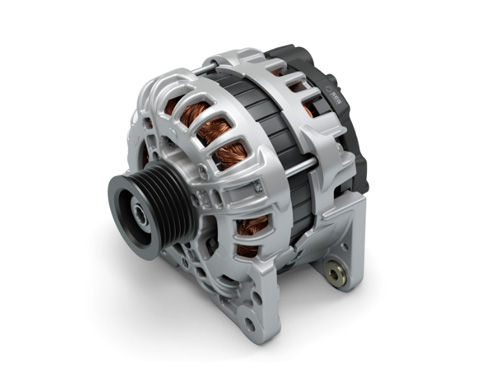
The power generation function of a generator relies on the electromagnetic induction between the rotor excitation magnetic field and the stator winding. Wear or damage to internal components can directly affect voltage stability.
Fault in rotor excitation winding
Short circuit or open circuit between turns of the excitation winding coil, or wear and erosion of the collector ring (slip ring), can lead to unstable excitation current and fluctuating magnetic field strength, causing the voltage induced by the stator winding to fluctuate accordingly.
The surface of the collector ring is dirty, and the wear of the electric brush is too short (below the wear limit, usually 5mm), which can cause poor contact between the electric brush and the collector ring, intermittent conduction of excitation current, and voltage jump.
Stator winding fault
Short circuits, open circuits, or loose wiring terminals in the stator winding can disrupt the balanced output of three-phase AC power, causing significant fluctuations in the rectified DC voltage. At the same time, the generator may also experience abnormal noise and overheating.
Damaged rectifier bridge
The rectifier bridge consists of six diodes, responsible for converting the alternating current generated by the stator into direct current. If a single or multiple diodes break down or open circuit, the rectified voltage will experience excessive ripple, unstable output, and in severe cases, the generator may not generate electricity.
3、 Mechanical transmission and abnormal load
Belt transmission system malfunction
The slipping, loosening, or jamming of the tensioning wheel bearings on the generator belt can cause the generator speed to fluctuate rapidly. The power generation is positively correlated with the rotational speed, and the fluctuation of rotational speed directly causes unstable output voltage, accompanied by the whistling sound of the belt, especially when turning on high load equipment such as air conditioning and headlights.
Sudden change in vehicle electrical load
Frequent and heavy load switching of electrical equipment (such as instantly turning on air conditioning compressors, high-power car lights, and onboard inverters) can cause rapid changes in generator load. If the response speed of the regulator is insufficient or the power reserve of the generator is insufficient, there will be a fluctuation phenomenon where the voltage drops instantaneously and slowly recovers.
Abnormal battery status
Excessive internal resistance of the battery (aging, power loss), sulfurization of the plates, or oxidation of the terminals can cause the battery to be unable to stably absorb the electrical energy output by the generator. When the generator is unloaded, the voltage is too high, and after connecting to the load, the voltage drops sharply, resulting in overall voltage instability.
4、 Line connection failure
Poor contact of generator output circuit
Loose or oxidized positive output line (B+terminal) of the generator, or intermittent short circuit caused by damaged insulation layer, can result in excessive losses during voltage transmission and significant fluctuations in terminal voltage.
Grounding line malfunction
Poor grounding of the generator casing can increase the resistance of the power generation circuit, leading to unstable voltage output and possibly accompanied by heating of the generator casing.

Copyright © 2025-2026 Cangzhou Yucheng Automobile Accessory Co.,Ltd. All Rights Reserved
