

Author:yucheng Time:2025-12-18 17:04:24 Views:104
Reasons and troubleshooting solutions for the failure of car generators to generate electricity
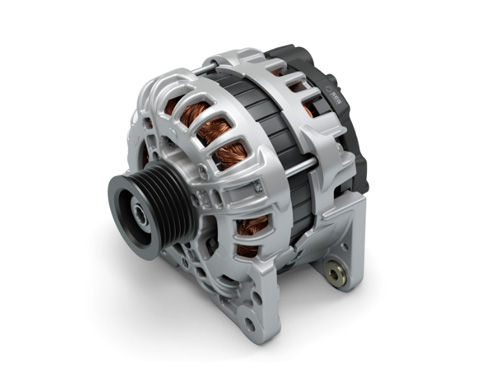
The failure of a car generator to generate electricity refers to the fault where the generator is unable to charge the battery or supply power to the onboard electrical appliances while the engine is running. This can directly cause the vehicle's lights to dim, the battery to run low, and ultimately result in stalling and inability to start. The root causes of the faults are concentrated in three categories: excitation circuit failure, internal component damage, and mechanical transmission faults. The specific analysis and troubleshooting methods are as follows:
1、 Root cause of core malfunction
1. Excitation circuit failure (no excitation, no power generation)
The generator needs to establish an excitation magnetic field before generating electricity. Most passenger cars are self-excited (relying on the battery to provide initial excitation current after starting), and this circuit fault is the primary reason for not generating electricity.
Voltage regulator damaged
The internal transistor and voltage regulator diode of the regulator are burned out, or the regulation module fails, making it impossible to control the excitation current on and off, the rotor cannot generate a magnetic field, and the generator does not generate electricity at all. Some models have regulators integrated inside the generator, while others are external independent components.
Excitation circuit open circuit/poor contact
The connecting wire between the regulator and the generator rotor winding is broken, and the plug is oxidized and loose; The generator collector ring (slip ring) is severely eroded, the electric brush is worn to the limit (less than 5mm), or the electric brush spring fails, resulting in the inability of excitation current to be transmitted to the rotor winding.
Abnormal battery power supply
The battery is severely depleted and the positive and negative terminals are oxidized and loose, making it impossible to provide initial excitation current to the generator and establish a magnetic field after the generator starts.
2. Internal components of the generator are damaged
Stator/rotor winding fault
The excitation winding of the rotor is open or short circuited, or the three-phase winding of the stator is burned out, the wiring terminals are soldered off, and electromagnetic induction cannot be carried out normally. The generator has no voltage output. This type of malfunction is often caused by overload, high temperature, or aging of the coil insulation layer.
The rectifier bridge has completely failed
All six diodes of the rectifier bridge are broken down or disconnected, making it impossible to convert the alternating current generated by the stator into direct current. Even if the internal magnetic field of the generator is normal, there is no effective voltage output.
Internal mechanical jamming
The generator bearings are worn and stuck, and the rotor is swept (due to friction between the rotor and stator), resulting in the generator being unable to rotate with the belt, naturally unable to generate electricity, and accompanied by obvious abnormal noise.
3. Mechanical transmission system malfunction
Belt breakage or severe slippage
The aging and breakage of the generator belt, or the failure of the tensioning wheel, result in insufficient belt tension and complete slippage. When the engine is running, it cannot drive the generator rotor to rotate, and the generator is in a "static" state with no voltage output.
Belt pulley damaged
The bearing of the generator pulley is stuck, the wheel body falls off, and the power cannot be transmitted to the inside of the generator, causing a failure to generate electricity.
4. Other auxiliary faults
Poor grounding of generator casing
The generator needs to form a complete circuit through the shell and body grounding. If the grounding point is corroded or the bolts are loose, it will cause the power generation circuit to be interrupted, resulting in no power generation.
Vehicle mounted computer (ECU) control malfunction
Some intelligent vehicle models are controlled by ECU to excite the generator. If the ECU fails or related sensors (such as speed sensors) fail, it will cause the ECU to be unable to send excitation commands and the generator will not work.
2、 Quick troubleshooting steps (no need for professional equipment)
Visual inspection
Open the engine compartment and check if the generator belt is broken or loose; Observe whether there are burn marks or oil leakage on the generator casing.
Check if the battery terminals and generator output terminals (B+) are oxidized and loose.
Start testing
Start the engine, turn on high-power appliances such as headlights and air conditioning. If the lights turn bright and dim, or if the appliances cannot work properly at idle, it is likely that the generator is not generating electricity.
Listen for any abnormal noise in the generator area, which is often caused by bearing jamming or rotor sweeping.
Electric brush and collector ring inspection
Remove the rear cover of the generator and check the degree of wear on the brushes. If the brushes are too short or stuck in the brush holder, replace them directly; Check if the surface of the collector ring is smooth, and if it is severely eroded, it needs to be polished or replaced.
3、 Maintenance precautions
When replacing generator components, it is necessary to first disconnect the negative terminal of the battery to avoid short circuiting and burning out the components.
When replacing the belt and tensioner, it is necessary to install according to the original factory winding diagram to ensure that the tension meets the standard.
If it is an internal winding or rectifier bridge fault that is difficult to repair with regular maintenance, it is recommended to directly replace the generator assembly.

Copyright © 2025-2026 Cangzhou Yucheng Automobile Accessory Co.,Ltd. All Rights Reserved
